The St. Louis Zoo
What's New?
Charlie the Komodo Dragon
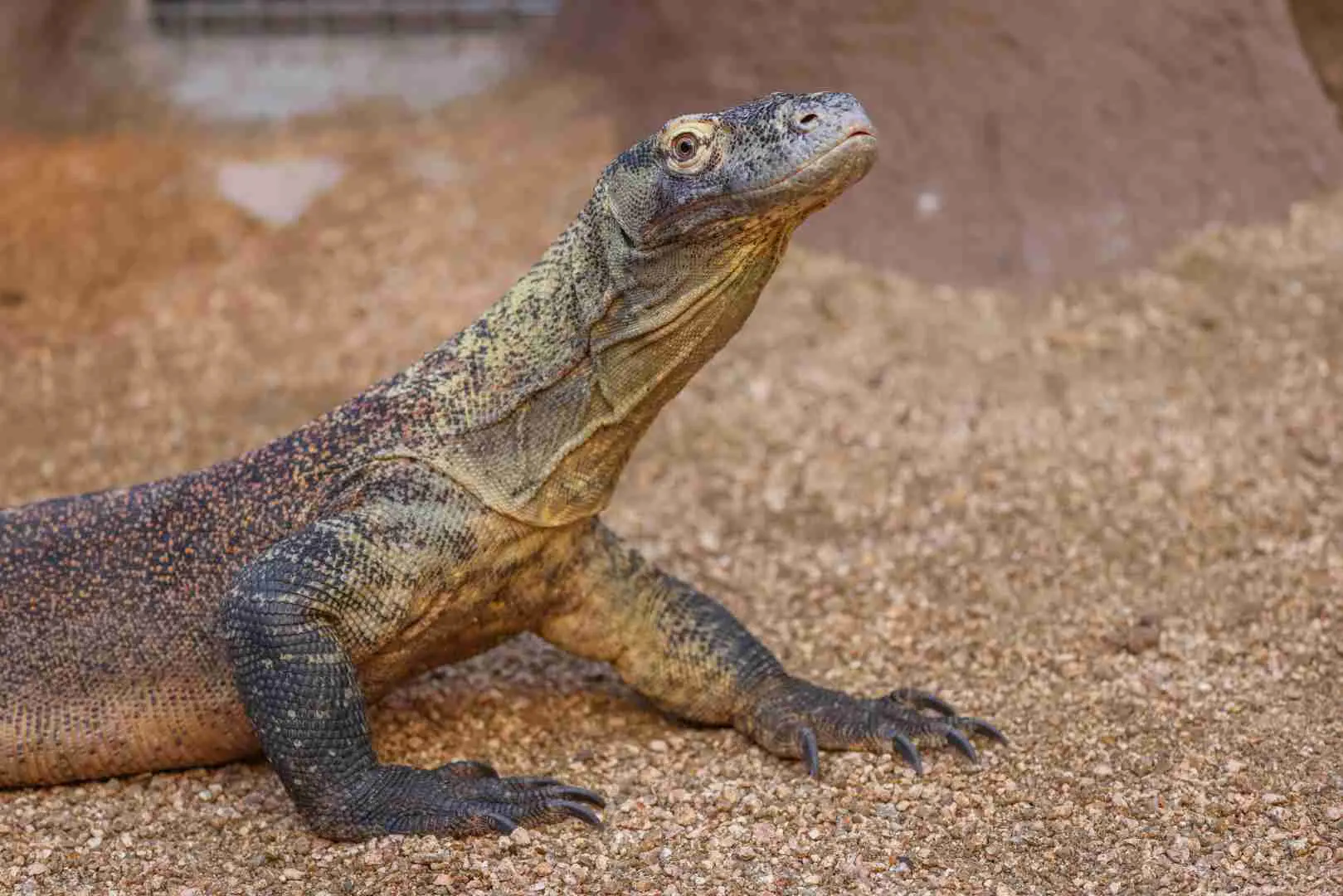 Six-year-old male Komodo dragon Charlie is the first
resident of
the Saint Louis Zoo’s brand new Komodo dragon habitat at the Charles H. Hoessle Herpetarium. Charlie is the
first of his species to live at the Zoo in more than 12 years.
The young Komodo dragon arrived at the Zoo on Sept. 20, 2025, from Bronx Zoo in New York, an Association of Zoos
and Aquariums (AZA)-accredited institution. The Herpetarium underwent special renovations to prepare for his
arrival, including the construction of a new solarium specially designed for the 6-foot-long reptile. Charlie is
named after Saint Louis Zoo Director Emeritus Charles H. Hoessle, namesake of the Herpetarium.
As of Oct. 20, Charlie can now be seen daily during regular Zoo hours and during Boo at the Zoo presented by SSM
Health Cardinal Glennon in the evenings through Oct. 30.
“Our team has been eagerly preparing for Charlie’s arrival, and we can’t wait for guests to discover all the
things that make Komodo dragons one-of-a-kind,” said Justin Elden, Curator of Herpetology and Aquatics, Saint
Louis Zoo. “It’s a privilege to have this unique and endangered species in our care.”
Six-year-old male Komodo dragon Charlie is the first
resident of
the Saint Louis Zoo’s brand new Komodo dragon habitat at the Charles H. Hoessle Herpetarium. Charlie is the
first of his species to live at the Zoo in more than 12 years.
The young Komodo dragon arrived at the Zoo on Sept. 20, 2025, from Bronx Zoo in New York, an Association of Zoos
and Aquariums (AZA)-accredited institution. The Herpetarium underwent special renovations to prepare for his
arrival, including the construction of a new solarium specially designed for the 6-foot-long reptile. Charlie is
named after Saint Louis Zoo Director Emeritus Charles H. Hoessle, namesake of the Herpetarium.
As of Oct. 20, Charlie can now be seen daily during regular Zoo hours and during Boo at the Zoo presented by SSM
Health Cardinal Glennon in the evenings through Oct. 30.
“Our team has been eagerly preparing for Charlie’s arrival, and we can’t wait for guests to discover all the
things that make Komodo dragons one-of-a-kind,” said Justin Elden, Curator of Herpetology and Aquatics, Saint
Louis Zoo. “It’s a privilege to have this unique and endangered species in our care.”
Cheetah Cubs
Public Debut! Cora’s Quints are now exploring their public habitat during brief
appearances in River’s Edge
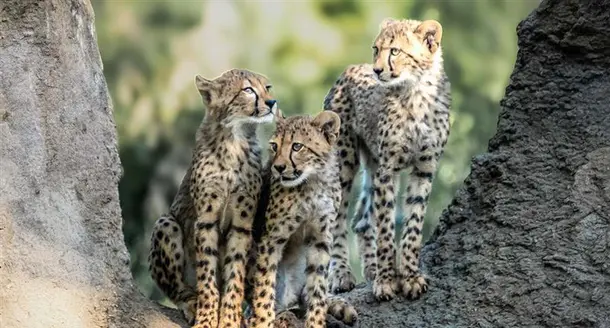 Four-month-old quintuplet cheetah cubs—Asha, Bozzie, Chirpa, Milani and
Wickett—are now making public appearances at the Saint Louis Zoo. The cubs and their mother gained access to the
cheetah habitat at River’s Edge starting today, Sept. 17, 2025. The cheetah cubs will be visible for extremely
limited hours over the next several weeks as they adjust to their new space. Cora and her quints will frequently
have access to their public habitat first thing in the morning (typically between 9 and 10 a.m.). The Zoo is
open from 9 a.m. to 5 p.m. daily, but there are no guaranteed times when the cubs will be visible.
The quintuplet cheetah cubs were born May 5, 2025, to first-time parents Cora, age 4, and Vader, age 8, and were
soon dubbed “Cora’s Quints.” In their first months of life, the cheetah cubs have bonded closely with their
mother and each other behind the scenes in a private habitat at the Zoo. The Animal Care Team has gradually
introduced them to new enrichment and experiences to aid their development and prepare them for public debut.
“Cora’s cubs are lively as ever. They have distinct personalities and interact with each other like any siblings
would—running, playing and wrestling under Cora’s close watch,” said Julie Hartell-DeNardo, the Saint Louis Zoo
Kevin Beckmann Curator of Carnivores. “The cubs have approached each new enrichment with brave curiosity. We’re
excited to see them explore this new habitat and for the public to meet this family for the first time."
All five cubs (three male and two female) are named after the Ewoks of Endor in honor of their parents, Cora and
Vader, also named for Star Wars characters.
Four-month-old quintuplet cheetah cubs—Asha, Bozzie, Chirpa, Milani and
Wickett—are now making public appearances at the Saint Louis Zoo. The cubs and their mother gained access to the
cheetah habitat at River’s Edge starting today, Sept. 17, 2025. The cheetah cubs will be visible for extremely
limited hours over the next several weeks as they adjust to their new space. Cora and her quints will frequently
have access to their public habitat first thing in the morning (typically between 9 and 10 a.m.). The Zoo is
open from 9 a.m. to 5 p.m. daily, but there are no guaranteed times when the cubs will be visible.
The quintuplet cheetah cubs were born May 5, 2025, to first-time parents Cora, age 4, and Vader, age 8, and were
soon dubbed “Cora’s Quints.” In their first months of life, the cheetah cubs have bonded closely with their
mother and each other behind the scenes in a private habitat at the Zoo. The Animal Care Team has gradually
introduced them to new enrichment and experiences to aid their development and prepare them for public debut.
“Cora’s cubs are lively as ever. They have distinct personalities and interact with each other like any siblings
would—running, playing and wrestling under Cora’s close watch,” said Julie Hartell-DeNardo, the Saint Louis Zoo
Kevin Beckmann Curator of Carnivores. “The cubs have approached each new enrichment with brave curiosity. We’re
excited to see them explore this new habitat and for the public to meet this family for the first time."
All five cubs (three male and two female) are named after the Ewoks of Endor in honor of their parents, Cora and
Vader, also named for Star Wars characters.
Spider Monkeys
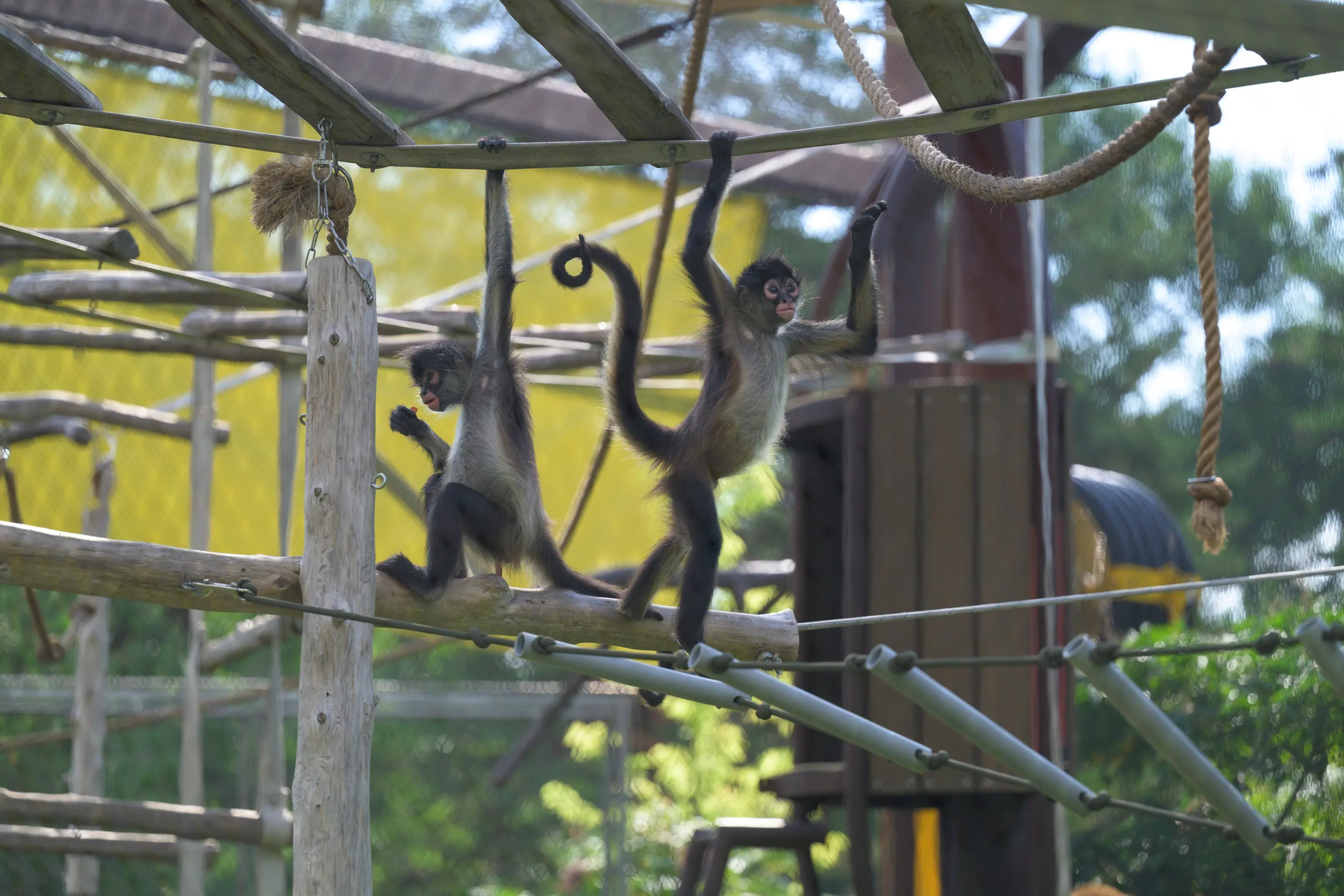 Four endangered Mexican spider monkeys
seized
from smugglers near the U.S. southern border have found a home at the Saint Louis Zoo where staff hopes their
story can spread awareness about the devastating illegal wildlife trade.
Federal authorities in spring 2024 seized the monkeys as infants in three separate confiscations. Each was
likely poached from the wild to be sold as an exotic pet, becoming a victim of a global criminal network that
typically kills the infants’ mothers during capture.
“This has to stop. These monkeys remind us that the sale of primates as pets must end once and for all,” said
Regina Mossotti, Vice President of Animal Care at the Saint Louis Zoo. “Buyers may not realize it, but the
illegal wildlife industry causes incredible suffering to so many animals. It not only harms endangered species,
it also puts their native habitats in peril.”
Four endangered Mexican spider monkeys
seized
from smugglers near the U.S. southern border have found a home at the Saint Louis Zoo where staff hopes their
story can spread awareness about the devastating illegal wildlife trade.
Federal authorities in spring 2024 seized the monkeys as infants in three separate confiscations. Each was
likely poached from the wild to be sold as an exotic pet, becoming a victim of a global criminal network that
typically kills the infants’ mothers during capture.
“This has to stop. These monkeys remind us that the sale of primates as pets must end once and for all,” said
Regina Mossotti, Vice President of Animal Care at the Saint Louis Zoo. “Buyers may not realize it, but the
illegal wildlife industry causes incredible suffering to so many animals. It not only harms endangered species,
it also puts their native habitats in peril.”
After their seizure, the four monkeys were initially taken to Gladys Porter Zoo in Brownsville, Texas for
evaluation and medical care. Sadly, returning them to the wild was not possible due to the species’ complex
social structures and the likelihood of re-poaching.
The monkeys arrived at the Saint Louis Zoo in April 2025 where they were gradually introduced to resident adult
female spider monkey Patty. They made their public debut in Michael and Quirsis Riney Primate Canopy Trails in
July. While they are now thriving in their new long-term home, these young primates are still impacted by their
early capture. One still carries a piece of birdshot lodged in her body. All four were hand-reared as infants
and continue to need specialized care. And while spider monkeys are a highly social species, they each grew up
without their mothers or family bonds.
Keepers gave the four monkeys names to reflect both their origins and personalities:
- Chico – male
- Oxomátli (oh-zoh-MAHT-lee) – female
- Xóchitl (SO-cheel) – female
- Chula – female